
Inside Merchant Taylors’ in 2026: A Parent’s 11+ Guide for 2027 Entry
- Posted by Reena Damani
- Date June 16, 2026
- Categories School-Specific 11+ Guides
So how do you actually get into Merchant Taylors'?
It is the question I am asked most often, by parents whose sons are in Year 4 or Year 5, at the kitchen table at 9pm on a Tuesday. They have usually spent two hours on Mumsnet and another forty minutes on a tutoring blog, and are no clearer for it.
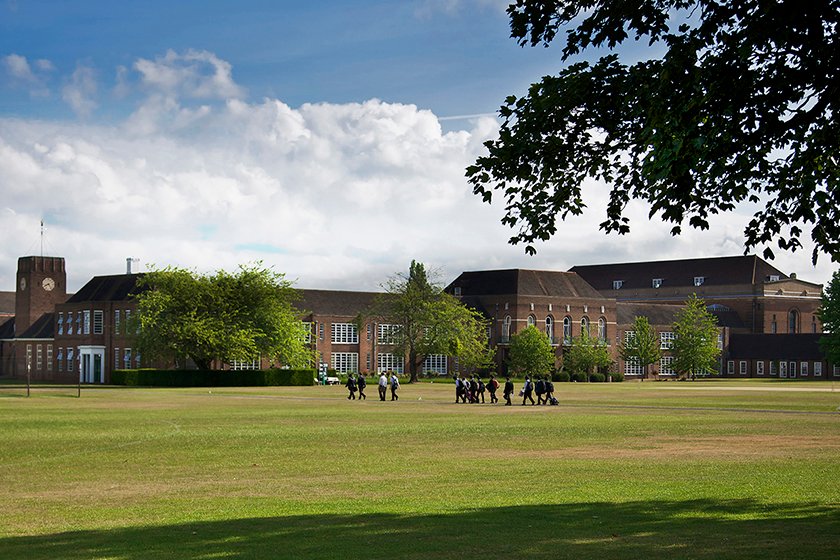
Two things to know up front. First, MTS has a unique paper most parents have not heard of: the General Paper. The school itself describes it as “untutorable”. It might involve making up new languages, working with heraldry, or solving lateral problems. It changes each year. The intent is to find rough diamonds, the curious boys whose flair shows up in unfamiliar tasks. Second, MTS is genuinely large and genuinely green — 285 acres in Northwood. The space matters. It shapes the kind of boy who thrives there.
This guide is current as of May 2026, for parents whose sons will sit in late November or early December 2026 for September 2027 entry. By the end you should be calmer than you started.
Inside Merchant Taylors' in 2026
Merchant Taylors’ in Northwood is one of the largest boys’ independent schools in the country, set in a 285-acre site that gives boys real space to breathe. Founded in 1561, the school has a unique combination of historical depth and a pragmatic, modern feel. Current parents describe it as academically strong without sliding into hothouse pressure.
The school’s framing of admissions is unusual. In addition to English and Maths, the 11+ includes a school-set General Paper which MTS itself calls “untutorable”. The headmaster has spoken publicly about it: it might involve making up new languages, working with heraldry, or solving lateral problems. It changes each year. The intent is to find curious boys whose flair shows up in unfamiliar tasks.
Sam Baldock joins as Head Master in September 2026, bringing experience from Westminster, Mill Hill, and Bedford.
What parents tell us they love
The 285-acre campus that gives boys space to breathe. Academic strength without hothouse pressure. The famous “untutorable” General Paper that finds curious boys. Strong tradition in rugby, music, and drama. Means-tested bursary support that extends to trips.
What parents tell us they worry about
The General Paper is genuinely unpredictable year to year. Exam dates are postcode-allocated — boys must check theirs. Standard 11+ tutoring does not cover the General Paper. The campus commute from London is long (Northwood, on the Metropolitan Line). The 25-minute interview probes commitment over years, not weeks.
The admissions process for September 2027 entry
MTS runs three written papers in late November or early December (postcode-allocated), an online Quest assessment, and a 25-minute interview in January for shortlisted boys. Verified against mtsn.org.uk in May 2026.
Key dates for September 2027 entry
Verified against the school’s admissions page in May 2026:
Date
Day
What happens
Spring 2026
—
Registration opens for September 2027 entry
Autumn 2026
—
Registration deadline
Late November / early December 2026
—
Written papers at MTS (English, Maths, General Paper) — postcode-allocated
—
Online Quest assessment (Maths and Verbal Reasoning)
January 2027
—
25-minute interview for shortlisted boys
February 2027
—
Offer letters issued
WHAT TO DO NOW: Diary every date above. The autumn deadline is unforgiving.Book an open day or visit early.Bursary applications run in parallel — start the conversation before the registration deadline if you need support.
The papers and the assessment in detail
What follows is a parent-friendly map of each stage, with the named techniques we teach.
No real exam questions appear in this guide. Every example is written by Academic Success in the style of the paper.
The three written papers (late November / early December)
Three written papers at MTS: English, Maths, and the General Paper.
English is comprehension with extended written-response questions, plus a short writing task. The comprehension tests inference, vocabulary, and the ability to explain ideas in your own words. The writing task is short but carefully read.
For English: the Inference Ladder, the PEE Chain, and the STAR Method for short writing.
Maths covers Key Stage 2 and stretches into early Year 7 problem-solving. Multi-step word problems, fractions, decimals, percentages, geometry, basic algebra in disguise. Show working at every step.
For Maths: the Column Method, the LCM Method, the Hidden Question, and the discipline of showing every step of working.
The General Paper is what makes MTS unique. The school sets it specifically to test lateral thinking, intellectual curiosity, and willingness to engage with unfamiliar tasks. Past years have included: making up rules for an invented language, working with heraldic symbols, solving lateral logic puzzles, designing systems for hypothetical scenarios. It changes every year. There is no past-paper canon to drill.
For the General Paper, we teach two named approaches. The First Principles Method: when a task looks unfamiliar, start by stating what you know about the underlying problem in plain English, before reaching for a method. And the Show Your Thinking Rule: MTS markers credit reasoning, not just answers. Even a wrong final answer with clear reasoning scores well; a right answer with no working scores poorly.
Worked example, in our voice. Imagine the General Paper asks: “Design a writing system for a language with only six sounds.” A boy who panics and writes nothing scores zero. A boy who writes “If there are only six sounds, I would need six symbols. I would make each symbol look like the shape your mouth makes when you say the sound. For example…” has scored well, even if the system itself is rough. The reasoning is the answer.

The online Quest assessment
Maths and Verbal Reasoning, run online. Adds a multiple-choice layer to the assessment.
For Quest: Skip-and-Return (if a question takes more than 30 seconds, mark it and move on), and 4-Step Elimination for multiple-choice maths.
The January small-group interview
A 25-minute one-to-one with senior staff. Longer than most 11+ interviews. MTS uses the length to probe genuine commitment to interests over years, not weeks. A boy who says he plays the cello will be asked which composers, which pieces, which teacher, and for how long.
For the interview, the Out Loud Method and what we call the Three-Year Rule: be ready to talk about any genuine interest with at least three years of depth behind it.

What MTS is really looking for
The papers test maths, English, lateral thinking, online cognitive ability, and live conversation. Four qualities show up repeatedly across the boys we have helped onto the MTS offer list.
- Lateral thinking and curiosity. The General Paper is built to find it. Boys who panic at unfamiliar tasks score poorly. Boys who think out loud, in plain English, score well.
- Maths depth beyond Key Stage 2. MTS Maths is calibrated above standard 11+ level. Year 6 problem-solving and introductory Year 7 problems from Easter of Year 5.
- Genuine, long-standing interests. The 25-minute interview probes depth. Boys whose only experience of an interest is a recent push will get caught out.
- Resilience across formats. MTS uses written papers, online Quest, and interview. A boy who is only good at one format will fall short. Prepare across all three.
The six most common pitfalls
- Treating the General Paper as untutorable. The paper is unpredictable, yes — but the underlying skill (think out loud, reason in plain English, show your working) can absolutely be taught. Drill First Principles and Show Your Thinking from spring of Year 5.
- Generic Maths preparation. MTS Maths is above standard 11+ level. Use Year 6 problem-solving material and introductory Year 7 problems from Easter of Year 5.
- Underweighting the online Quest. Many parents focus on the written papers and treat the online Quest as a warm-up. It contributes to ranking. Build online practice in.
- Inventing interests for the interview. The 25-minute format catches invented interests. Talk about genuine ones — even if they are unusual.
- Forgetting postcode allocation. Exam dates are allocated by postcode. Check yours when the school confirms — you cannot choose.
- Letting nerves grow over autumn half-term. The November/December papers fall just after half-term. Half-paced half-term, real downtime included.
The 12-month preparation pathway
A calm, well-paced 12 months for a Year 5 boy targeting MTS.
November to February (Year 5): Foundations. A diagnostic in English and Maths. Daily reading, 20–30 minutes. Begin a vocabulary book. Confirm Year 4 and Year 5 maths fluency. Begin First Principles practice with lateral puzzles weekly.
March to May (Year 5): Building. Inference Ladder for comprehension. PEE Chain for written answers. STAR for short writing. Maths defaults: Column Method, LCM Method, Hidden Question. General Paper practice with school-style unfamiliar tasks.
June to August (summer): Curriculum coverage. Year 6 maths content covered. Stretch problems introduced. Online Quest-style practice begins. First short-format mock at the end of June.
September to early November (Year 6): Full-format mocks. Two full MTS-format mocks per month — English, Maths, General Paper, Quest. Side-by-Side Review every mock. Register by autumn.
Late November / early December: Exam week. Light revision only. Walk or check the route to MTS in advance. Two evenings before: early dinner, a film, early night.
January: Interview run-in. After written papers, intensive interview prep. Two practice 25-minute interviews, including one with someone he doesn’t know.
The final eight weeks
From mid-September to late November, your son is in the run-in.
Eight weeks out (mid-September). Three sessions a week. One full MTS-format mock per fortnight.
Six weeks out (early October). Two full mocks across this fortnight.
Four weeks out (mid- to late October). Half-term falls here. Two light sessions, then real downtime. Practise the Anchor Face.
Two weeks out (mid-November). One confidence mock. Finish all heavy revision. Tighten sleep.
Exam week (late November / early December). No mocks. Light vocabulary review only. Two evenings before: early dinner, a film, early night.
THE ANCHOR FACE TECHNIQUE Boys lose marks on the General Paper not because they don’t have ideas but because the unfamiliarity makes them freeze.Anchor Face: when a question looks impossible at first, mark it, breathe once, write the first thing you know about the underlying problem, and build from there.
A note from Reena. In the final week, your job as a parent is not to add. It is to remove. Remove distractions. Remove screens after 8pm. Your calm is the most important variable in your son’s exam-day performance.
Mock exam strategy for KCS
When to start. Short-format mocks from late June of Year 5. Full MTS-format mocks (all papers + Quest) from August.
What a good MTS-format mock looks like. Three written papers (English, Maths, General Paper-style) plus an online Quest section. The General Paper-style piece must use a different unfamiliar task each time — no two should look alike.
How to read a mock report. The score is the least important. The breakdown of where marks were lost is where the value sits. For the General Paper specifically, the marker should annotate the reasoning, not just mark right or wrong.
THE SIDE-BY-SIDE REVIEW METHOD After every mock, your son sits with a fresh page. On the left, the question he got wrong. On the right, in his own handwriting, the correct working step by step. For General Paper-style work, the right column should show clearer reasoning, even on the same wrong answer.
Our MTS mocks run several times across Year 5 and Year 6, calibrated to all three written papers plus the online Quest.
Frequently asked questions
Can the General Paper really be prepared for?
The specific tasks cannot — they change every year. But the underlying skill (think out loud, reason in plain English, show working on unfamiliar problems) absolutely can. Drill First Principles practice with lateral puzzles from spring of Year 5.
Is MTS realistic for a London family with a long commute?
For Year 7, the commute is real. Metropolitan Line to Northwood is doable from large parts of north-west London but adds time. Many MTS families weigh this carefully against alternatives. Visit, do the commute on a school day, then decide.
How does MTS compare to Habs Boys' or St Paul's Boys'?
Habs Boys' is also in north-west London (Elstree, Herts) with bespoke entrance papers. St Paul's Boys' is in Barnes with a smaller intake and ISEB pre-test. MTS has the unique General Paper, a larger 11+ intake, and the 285-acre campus. Each has its own admissions format.
Are bursaries genuinely available?
Yes. MTS offers bursaries 10–100% of fees. Apply alongside admissions.
How do I know if my son has a realistic chance?
We know after one diagnostic and one trial class. Within two hours we can usually tell you whether MTS is realistic, ambitious, or beyond comfort.
No 11+ programme can guarantee an offer. Anyone who tells you otherwise is selling you something.
What preparation can deliver is this. By the time your son sits the MTS papers in November, he will know the three-paper format inside out, including the General Paper. He will have named techniques for every question type. He will have sat the paper at full pace under timed conditions multiple times. He will walk into the assessment calm. And by interview in January, he will be able to talk about genuine interests in depth. Whether the offer comes is in his hands. But he will sit it as the best version of himself.
That is what twelve good months can do.
Your next steps with Academic Success
- See the website. Download the full PDF guide. Download at academicsuccess.uk →
- Join us on social media. @academicsuccess.uk.
- Sign up to the programme that fits your child.
- Weekly Workshops — small-group term-time classes on Zoom, building English, Maths, and General Paper-style lateral thinking. Browse →
- Holiday Intensives — October half-term in particular helps in the run-in to the November/December papers. Browse →
- Summer School at NLCS, Edgware — flagship in-person summer school. Browse →
- MTS-format Mock Exams — all three written papers plus online Quest, with Side-by-Side Review. Browse →
About Reena and Academic Success
Reena Damani is the founder and head teacher of Academic Success UK. A Habs Girls’ alumna with over 20 years working with children preparing for selective school entry, she has guided hundreds onto the offer lists of London’s most competitive schools, including MTS, Habs Boys’, St Paul’s, the Habs schools, NLCS, and the Tiffin schools.
Academic Success UK is a specialist tutoring and school preparation company based in north London. Small-group teacher-led classes, term-time programmes, holiday intensives, and full mock exams for 4+, 7+, and 11+.
Confidence first, results follow.
academicsuccess.uk
Tag:Boys' Schools

You may also like
So how do you actually get into Westminster? It is the question I am asked most often, by parents whose children are in Year 4 or Year 5, at the kitchen table at 9pm on a Tuesday. They have usually …
So how do you actually get into Tiffin Girls’? It is the question I am asked most often, by parents whose daughters are in Year 4 or Year 5, at the kitchen table at 9pm on a Tuesday. They have …
So how do you actually get into South Hampstead? It is the question I am asked most often, by parents whose daughters are in Year 4 or Year 5, at the kitchen table at 9pm on a Tuesday. They have …