
Inside Habs Boys’ in 2026: A Parent’s 11+ Guide for 2027 Entry
- Posted by Reena Damani
- Date June 16, 2026
- Categories School-Specific 11+ Guides
So how do you actually get into Habs Boys'?
It is the question I am asked most often, by parents whose sons are in Year 4 or Year 5, almost always at the kitchen table at 9pm on a Tuesday. They have usually spent two hours on Mumsnet and another forty minutes on a tutoring company’s blog, and are no clearer for it.
I want to do something different here. I am a Haberdashers’ Girls’ alumna. I walked the same Butterfly Lane campus your son may now be preparing to join. From 2026, both Habs Boys’ and Habs Girls’ use the same paper-based QUEST first-round assessment. So when Academic Success prepares boys for Habs Boys’, we are preparing them for a paper my own former school now also sets.
The assessment has changed. Until 2025, Habs Boys’ used an online CEM Select format. From November 2026, it is a paper-based QUEST with four separate papers. Most online advice still describes the old format. If your son works through five “Habs practice papers” downloaded from a mainstream tutoring site, he is preparing for an exam he will not actually be taking.
This guide is current as of May 2026 and written for parents whose sons will sit on Friday 20 November 2026 for September 2027 entry. By the end you should be calmer than you started, not more anxious. That is the bar I write to.
Inside Habs Boys' in 2026
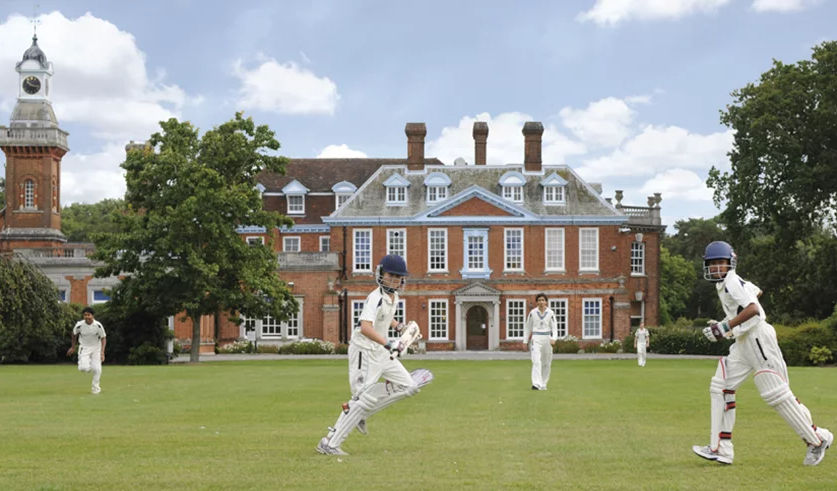
Haberdashers’ Boys’ School sits on a 104-acre campus in Elstree, just inside the M25 and twenty minutes from Edgware on the school’s coach network. It shares the site with Habs Girls’, and since 2023, the two schools teach A-Levels jointly.
The Habs your son will join in 2027 is markedly different from the school of even ten years ago. In 2021, it dropped “Aske’s” from its name and changed its motto from “Serve and Obey” to “Together, boundless”. In 2025, the Senior School was named Independent School of the Year. From 2026, the assessment moved to QUEST. And the wider Habs Group now includes Lochinver House School and St Martin’s School, Northwood, which feed in via a Group Preferential Pathway.
What parents tell us they love
A school that takes academic challenge and pastoral care seriously, not one at the expense of the other. 104 acres of green campus and outstanding facilities. A diverse student body from a wide range of state and independent primaries. Around 10 per cent of pupils on means-tested bursaries. Strong Oxbridge and Russell Group leavers’ destinations.
What parents tell us they worry about
The fee level. The “tiger parent” reputation that persists in some forums, even though the school has worked hard to soften it. Whether their son can compete with Habs Prep boys who have been preparing for years. The geographic stretch — Elstree, not central London. And the interview, where roughly half of the candidates are eliminated.
A note from Reena. These worries are good ones, and they are precisely what the open day exists to answer. Visit. Walk the campus. Watch the boys move between lessons. Talk to current parents in the car park. The right school is the one your son will thrive in for seven years, not the one with the most prestigious name on the gates.
The admissions process for September 2027 entry
Habs Boys’ runs a two-stage process. First stage: paper-based QUEST in November of Year 6. Around half of the candidates are invited back in January for a second-stage interview, with one or both parents attending the same day for a separate informal meeting with the leadership team. Offers go out in February.
Two things to note. The QUEST is new from 2026, so most online practice resources are out of date. And the registration deadline is early November, with separate (and earlier) deadlines for scholarships and bursaries. Missing the bursary deadline by a single day means missing the bursary entirely.
Key dates for September 2027 entry
Verified against the school’s admissions page in May 2026:
Date
Day
What happens
6 November 2026
Friday
Registration deadline (Year 7 application form)
9 November 2026
Monday
Scholarship application deadline
19 November 2026
Thursday
Bursary application deadline
20 November 2026
Friday
First round QUEST assessment (paper, on campus)
8–15 January 2027
Friday–Friday
Second round assessment (interview week)
12 February 2027
Friday
Offers sent out by email
25 February 2027
Thursday
Offer holder event at the school
3 March 2027
Wednesday
Offer acceptance deadline (12 noon)
WHAT TO DO NOW: Diary every date above. The bursary deadline (19 November 2026) is unforgiving and falls before the assessment. Book an Open Day or School in Action visit. Habs is not a school to choose without seeing. If considering scholarships (academic, art, design, technology, drama, music, sport), the deadline (9 November 2026) is even earlier. Apply early. The registration form takes longer than parents expect.
The format of the assessment, paper by paper
What follows is a parent-friendly map of what each paper actually contains, with the named techniques we teach to handle each.
No real exam questions appear anywhere in this guide. Every example is written by Academic Success in the style of the QUEST paper.

Paper 1: Maths and Non-Verbal Reasoning (45 minutes)
A combined paper switching between numerical questions and visual reasoning. Maths is at Key Stage 2 level: number, fractions, percentages, geometry, statistics, and an introduction to algebra. NVR uses pattern recognition: shape sequences, odd-one-out, visual analogies, rotations. Multiple-choice, paper-based.
The non-negotiable techniques are the Column Method for any addition, subtraction, or multiplication beyond two digits (mental arithmetic costs marks at exam pace), the LCM Method for fractions (lowest common multiple of the denominators, convert, then add), and the Hidden Question for word problems (underline the actual question being asked — many wrong answers come from solving the right calculation but answering the wrong question).
Worked example, in our voice. A box contains 144 chocolates. One quarter are dark, one third are milk, the rest are white. How many white chocolates? A) 24, B) 36, C) 48, D) 60. Working: a quarter of 144 is 36; a third is 48; dark plus milk is 84; white is 144 − 84 = 60. The answer is D. Notice C: 48 is the milk total alone. A classic distractor. The QUEST is full of them.
Paper 2: English and Verbal Reasoning (40 minutes)
A combined paper. English includes a reading passage with comprehension questions, plus SPaG (spelling, punctuation, grammar) and vocabulary in context. VR includes verbal analogies and word relationships. Multiple-choice, paper-based.
The two named techniques are the Inference Ladder (a four-rung structure for comprehension: literal meaning, key word, connotation, writer’s intent) and the Definition Method for VR vocabulary (read the word, write its plain-English meaning, then check that meaning against each answer choice — boys who skip the middle step pick the answer that sounds closest, not the one that means the same).
Paper 3: Creative Comprehension (20 minutes)
A shorter, deeper reading task. Boys read a passage and respond in fuller written answers, not multiple choice. The school is looking for careful reading, vocabulary, and the ability to support an interpretation with reference to the text.
The technique we drill from late Year 5 is the PEE Chain: Point, Evidence, Explanation. A clear sentence answering the question, a short quote or specific reference to the passage, then one or two sentences linking the evidence back to the point. Short, clear, and impossible to mark down for vagueness.
Paper 4: Creative Writing (20 minutes)
A 20-minute handwritten task on a given prompt. The school is looking for imagination, structure, descriptive ability, technical accuracy, and clear handwriting.
Four techniques carry this paper. STAR for story structure (Setup, Tension, Action, Resolution — STAR keeps twenty minutes tight). The In the Action Rule for openings: open with a character already doing something interesting, not “It was a sunny day. I woke up.” Show Don’t Tell: “He was scared” becomes “His hand shook on the door handle.” And Pace Control: short sentences for tense moments, longer sentences for calm.
The interview
Around twenty minutes, with a senior member of staff. The interviewer is looking for genuine interests outside the curriculum, the ability to talk in full sentences with eye contact, curiosity (your son asking questions, not just answering them), self-awareness (“What would you find difficult about Habs?” is asked more often than parents expect), and respect for staff and peers. We prepare boys carefully, but never with a script. Habs sees rehearsed answers immediately.> A note from Reena. Every technique above is a specific, named method. “Read the passage carefully” is not a technique; it is a wish. “Climb the Inference Ladder” is a technique. Boys remember named techniques under exam pressure. They do not remember vague advice.
What Habs Boys' is really looking for
Across the boys we have helped onto the Habs Boys’ offer list, four qualities show up again and again. The school is designed to measure them, even if those words never appear on a paper.
- Genuine curiosity, not trained performance. Habs is unusually good at spotting the difference between a boy drilled to a script and a boy who actually loves learning. The Creative Writing rewards imagination. The interview rewards an unprompted aside about a book the boy has actually finished.
- Calm, accurate working under multiple time pressures. The QUEST switches subject and skill type every twenty to forty-five minutes. The boys who score well are the ones who can re-set between sections.
- Vocabulary, range of reading, and quality of expression. Two English papers plus the writing paper account for around 80 of the 125 minutes. A boy who reads widely and writes in clean, varied sentences has a real edge.
- Character that comes through in conversation. In the interview, Habs is not looking for the brightest 11-year-old in the country. It is looking for the boy who will thrive on this campus for seven years. Most of that is character.
A note from Reena. Parents often ask me, “Is my son academic enough for Habs Boys’?” That is almost always the wrong question. The right question is: is my son the kind of boy who, with steady support, can build the four qualities above over the next 12 months? Almost every Year 4 boy has the raw ability. What separates the boys who walk out of the interview with an offer is the year of preparation behind them.

The six most common pitfalls
Across the Habs Boys’ families we have worked with, the same six mistakes come up again and again. None of them are about ability. All are correctable, often quickly, if you spot them in time.
- Out-of-date practice resources. The Habs assessment changed in 2026 from online CEM Select to paper-based QUEST. Most online practice papers and exam guides still describe the old format. Use only QUEST-format material from 2026 onwards.
- Underpreparing creative writing. Many bright boys, especially strong mathematicians, treat creative writing as the throwaway twenty minutes. It is one of four equally weighted papers. Drill STAR, In the Action openings, and Show Don’t Tell weekly from spring of Year 5.
- Ignoring interview preparation. Half of QUEST candidates are eliminated at the interview, yet many families spend 90 per cent of preparation on the papers. Begin in mid-October of Year 6. It does not need to be expensive. It does need to happen.
- Missing the bursary or scholarship deadline. The bursary deadline (19 November 2026) is earlier than the assessment itself; the scholarship deadline (9 November 2026) earlier still. Both require documentation that takes time to compile. If there is any chance you may need bursary support, start in September of Year 6 at the latest.
- Confusing 11+ with 11+ deferred. If your son is at a primary that finishes at Year 6, apply for standard 11+. If he is at a Prep that runs to Year 8, the school strongly recommends 11+ deferred (sit now, join Year 9 in 2029). Wrong route, needless friction with feeder preps.
- Letting nerves grow over the autumn half-term. Two extremes hurt boys equally. The total break, where he stops working over October half-term and walks into November rusty. The total panic, where every conversation is the exam and he arrives flat and afraid. Both avoidable with a calm, paced run-in.
QUICK REFERENCE: THE SIX PITFALLS AT A GLANCE 1. Out-of-date practice resources → QUEST-format only. 2. Underpreparing creative writing → Drill weekly from the spring of Year 5. 3. Ignoring interview prep → Half are cut here. Start mid-October of Year 6. 4. Missing bursary or scholarship deadlines → Start paperwork in September of Year 6. 5. Confusing 11+ with 11+ deferred → Y6 prep = 11+. Y8 prep = 11+ deferred. 6. Nerves over autumn half-term → Half-paced October. Real holiday in there too.
The 12-month preparation pathway
A calm, well-paced 12 months for a Year 5 boy targeting Habs Boys’, running from November of Year 5 to the QUEST in November of Year 6.
November to December (Year 5): Foundations. A diagnostic in maths and English. Daily reading, 20–30 minutes, mixing genres. Begin a vocabulary book: every new word, the meaning, and a sentence. Confirm Year 4 and Year 5 fluency on times tables, fractions, decimals, place value. One short creative writing exercise per fortnight.
January to March: Building. Comprehension passages with the Inference Ladder taught explicitly. Maths: Column Method, LCM Method, Hidden Question as defaults. NVR: pattern recognition systematically. Creative writing: STAR introduced, weekly 20-minute pieces marked and reviewed. At least one classic text by Easter.
April to June (Year 5): Curriculum coverage. Maths: cover the Year 6 content the QUEST tests. English: longer passages with critical analysis. Creative Comprehension: PEE Chain answers. First short-format mock at the end of June.
July to August: Pace and accuracy. Light maintenance, no more than four sessions a week. Two creative writing pieces per week, drilling Show Don’t Tell and Pace Control. Reading slows in volume but rises in difficulty. Open Day visit. A real holiday in there.
September to early November (Year 6): Mastery and run-in. Two full QUEST mocks across the autumn term, three at most. All four papers each. Side-by-Side Review every mock. Interview preparation begins in mid-October. The final week is gentle revision only — no new content, sleep matters more.
Mid-November onwards: Interview run-in. A short pause after the QUEST. Late November and December: light interview preparation, one conversation a week. Christmas: a real break. Early January: two practice interviews, one with someone he doesn’t know.
A note from Reena. Volume of practice is not the goal. Volume of correctly-reviewed practice is the goal. A boy who does 20 papers and reviews none of them is worse off than the boy who did 8 papers and reviewed all of them carefully. Reviewing is where the learning happens.
The final eight weeks
From late September to mid-November, your son is in the run-in to the QUEST. The single most useful thing you can do as a parent is keep the temperature low. Eight weeks out (late September). Three sessions a week, no more. One full QUEST-format mock per fortnight. Genuine break time built in. Identify the top three weakest areas from recent mocks and target only those. Reading continues, as pleasure reading.
Six weeks out (early October). Two full mocks across this fortnight, all four papers. Sleep schedule moving towards an assessment-day pattern. October half-term falls roughly here: plan two light sessions, then real downtime.
Four weeks out (late October half-term). Two full mocks per week, but shorter sessions in between. Side-by-Side Review every time. Begin to talk about the day itself, just so it is not unfamiliar. Practise the Anchor Face.
Two weeks out (early November). One full mock, no more — a confidence mock against material he can do well. Finish all heavy revisions. Tighten sleep to 9.5 to 10 hours per night.
Assessment week (week of 20 November 2026). No mocks this week. None. Light vocabulary review only, 15 to 20 minutes a day. Drive the route to the school in advance: the Elstree campus is set back from the road and surprisingly hard to find on the day. Two evenings before, an early dinner, a film, an early night. The night before, lay out the equipment together. He sleeps. You read.
THE ANCHOR FACE TECHNIQUE
Boys lose marks on QUEST not because they don’t know the answer, but because a tricky question early on sets the panic spiralling. Once a boy is rattled, he gets a string of easy questions wrong. We teach the Anchor Face. When he meets a question he can’t do in 30 seconds, he marks it, breathes once, and moves to the next question with his face deliberately neutral and his shoulders relaxed. The face affects the body. The body affects the next answer. It is the difference between an interview invitation and a near miss for many boys.
A note from Reena. In the final week, your job as a parent is not to add. It is to remove. Remove distractions. Remove screens after 8 pm. Remove the impulse to ask “Are you ready?” every five minutes. Your calm is the single most important variable in your son’s assessment performance. Boys take their cue from their parents.
Mock exam strategy for Habs Boys'
Mocks are not just rehearsal. Used well, they are the most efficient piece of preparation in the whole 12 months. Used badly, they entrench bad habits. The difference is in three things: when, what against, and what happens after.
When to start. Not in the first six months. Boys who mock too early have not yet learnt the techniques the mock is meant to test. Short-format mocks (single 20-minute papers) from late June of Year 5. Full-format mocks (two of the four QUEST papers) from August. Full QUEST mocks (all four papers in sequence) from late September of Year 6.
What a good Habs-format mock looks like. Four papers, not two. Paper-based, with a separate answer sheet for the multiple-choice sections. Handwritten creative writing, marked for content, structure, and accuracy. Difficulty calibrated to the new QUEST level, not the old CEM Select. Marked the same week, with a written report.
How to read a mock report. The score is helpful but the least important. The breakdown of where marks were lost, by topic and question type, is where the value sits. So is the top three recurring error types: misreading the question, missing the negative, missing apostrophes, weak creative writing openings. Track the trajectory, not the absolute score. A boy who scores 58, 64, 70, 74 across the autumn is on the right curve. A boy stuck at 78 every time has plateaued.
THE SIDE-BY-SIDE REVIEW METHOD After every mock, your son sits with a fresh page. On the left, the question he got wrong. On the right, in his own handwriting, the correct working step by step. For creative writing, the left is the original sentence; the right is the rewritten version, applying Show Don’t Tell or Pace Control. Five mocks done this way teach more than fifty mocks done without review.
Our Habs Boys’ mocks at Academic Success run several times across Year 6, calibrated specifically to the new QUEST paper.
Frequently asked questions
My son is at a state primary. Is he at a disadvantage?
Not at all. Habs has stated explicitly that it takes "roughly equal numbers of children from state and independent schools". The diversity of experience and interest in each Year 7 cohort is part of what the school wants. With the right 12 months of work, your son is on equal footing.
Should I apply for 11+ or 11+ deferred?
If your son is at a primary that finishes at Year 6, apply for standard 11+ (joining Year 7 in 2027). If he is at a Prep that runs to Year 8, the school strongly recommends 11+ deferred (sitting now, joining Year 9 in 2029). Ask your son's current school first if unsure.
Should I apply for a bursary, a scholarship, or both?
You can hold both at once. Scholarships are awarded on demonstrated talent in academic ability, art, design technology, drama, music, or sport. Bursaries are means-tested. If a scholarship is genuinely on the table, the supporting portfolio takes weeks to compile. Start in September of Year 6 at the latest.
What is the interview really looking for?
Not the brightest answer. It is looking for a boy who is curious, who can hold a real conversation, who treats adults with warmth and respect, and who has interests outside the curriculum he can talk about with enthusiasm. The school wants to imagine your son thriving for seven years. Character, not cleverness.
How does Habs Boys' compare to City of London Boys' or QE Boys'?
City of London Boys' is in central London with its own bespoke paper and a more urban feel. QE Boys' is a state grammar (free), one English and one maths paper, no interview. Habs Boys' is the broader independent option, with creative writing and an interview, and a campus rather than a city school. Many families prepare for two or three of these in parallel.
How do I know if my son has a realistic chance?
We know after one diagnostic and one trial class. Within two hours we can usually tell you whether Habs Boys' is realistic, ambitious, or a stretch beyond comfort. If realistic, we plan the year. If ambitious, we plan the year and add a strong second-choice school. If beyond comfort, we have a candid conversation about other schools where his ability shines.
No 11+ programme can guarantee an offer. Anyone who tells you otherwise is selling you something.
The boys I see succeed at Habs are not always the brightest in the room, and they are almost never the ones who started earliest or worked the longest hours. They are the boys whose families started at the right time, picked the right preparation, and stayed calm through the autumn of Year 6.
What preparation can deliver is this. By the time your son sits the QUEST, he will know the four papers inside out. He will have named techniques for every question type. He will have sat the paper at full pace under timed conditions multiple times. He will walk into the room calm. By the time he sits the interview in January, he will have had real conversations with adults he doesn’t know, on subjects he genuinely cares about, in his own words. Whether the offer comes is then in his hands and on the day. But he will sit it as the best version of himself.
That is what twelve good months can do.
Your next steps with Academic Success
Three things to do next.
- See the website. Download the full PDF guide. This blog is the front door. The full Habs Boys’ parents’ guide goes deeper: every named technique with worked examples, the complete 12-month pathway, and the longer parent FAQ. Free.
Download the full Habs Boys’ Parent’s Guide at academicsuccess.uk →
- Join us on social media. I post weekly on Instagram and TikTok at @academicsuccess.uk — short videos and longer pieces on what is changing across the London selective schools, named techniques in action, and the small things parents can do this week.
- Sign up to the programme that fits your son.
- Weekly Workshops — small-group term-time classes on Zoom, building maths and English fluency, reasoning, comprehension, creative writing, and exam technique. Designed for the bespoke selective school papers, including the new Habs QUEST. Browse weekly workshops →
- Sunday Interview Training — a focused block from October of Year 6, building real interests, conversation poise, and the ability to ask thoughtful questions back. Not a script. Browse interview training →
- Holiday Intensives — October half-term, Christmas, February half-term, Easter, May half-term, and summer. October half-term is particularly useful in the run-in to the November QUEST. Browse holiday intensives →
- Summer School at NLCS, Edgware — our flagship in-person summer school, with Year 5 and Year 6 streams covering the selective-school track. Small classes, full days. Browse Summer School →
- Habs-format Mock Exams — Habs-calibrated mocks covering all four QUEST papers, with full written feedback and a Side-by-Side Review session. Three to four mocks across Year 6 is our minimum recommendation. Browse Habs-format mocks →
For current dates, prices, and availability, see academicsuccess.uk.
About Reena and Academic Success
Reena Damani is the founder and head teacher of Academic Success UK, and a Haberdashers’ Girls’ alumna. With more than 20 years working with children preparing for selective school entry, she has guided hundreds onto the offer lists of London’s most competitive schools, including Habs Boys’ and Habs Girls’, NLCS, QE Boys’, The Henrietta Barnett School, City of London, and the Tiffin schools.
Academic Success UK is a specialist tutoring and school preparation company based in north London, working with children aged 4 to 11. Specialist 4+, 7+, and 11+ exam preparation. Small-group teacher-led classes. Term-time programmes, holiday intensives, and full mock exams.
Confidence first, results follow.
academicsuccess.uk
Tag:Boys' Schools

You may also like
So how do you actually get into Westminster? It is the question I am asked most often, by parents whose children are in Year 4 or Year 5, at the kitchen table at 9pm on a Tuesday. They have usually …
So how do you actually get into Tiffin Girls’? It is the question I am asked most often, by parents whose daughters are in Year 4 or Year 5, at the kitchen table at 9pm on a Tuesday. They have …
So how do you actually get into South Hampstead? It is the question I am asked most often, by parents whose daughters are in Year 4 or Year 5, at the kitchen table at 9pm on a Tuesday. They have …